Showing posts with label Audition and Subtraction. Show all posts

Friday, July 17, 2015

Friday Feedback with Amy Fellner Dominy - Character Mapping


Already Friday again!

Whew!!

I'm super happy today because I have one of my besties here -- or as we like to call ourselves "BVFEs" (You figure it out)!

Amy Fellner Dominy and I were both members of the Class of 2K11 now The Graduates, and we fell instantly in love with each other's writing, and it went from there.

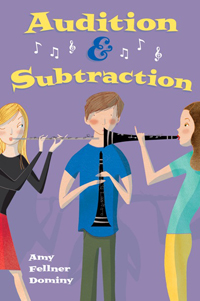
Her first middle grade novel, OyMG (see what they did there?!?) and her second, AUDITION & SUBTRACTION are both chock full of wonderful characters searching for identity, and beautiful writing.

Amy is also an incredible "Beta reader" for me and I believe her insightful feedback on an earlier draft of THE SUMMER OF LETTING GO which sent me frantically revising, was substantially responsible for the book finally getting a deal.

Amy's newest book, a YA this time, A MATTER OF HEART, follows 16-year old Abby Lipman who, on track to win the state swim championships and qualify for Olympic trials, learns she has a deadly heart condition.

Now, Abby is forced to discover who she is without the one thing that's defined her entire life.

School Library Journal said of A MATTER OF HEART, "More than a sports novel, this book delves deep into issues of identity... and the importance of support systems while making life-altering decisions."

I picked up a copy last week and, though I'm still finishing two other books, allowed myself to read the opening breathtaking chapter. It's so very good!

So, without further ado, here's Amy!**


Good Morning!

I’m so glad you’re here for Teacher’s Write and Friday Feedback.

I’m really glad to be here, too!

Today, I want to talk to you about what I think is arguably the MOST important part of your story.

Your characters.

But before I get to that, I want to talk about how RIDICULOUSLY DIFFICULT it is to write a book.

"If you’re writing a book you’re juggling characters, problems, goal, stakes, dialogue, narrative, POV, action, setting, theme, symbolism, language, pacing, rhythm, style, grammar, rising tension, character arcs, growth, subplots, climaxes, denouements, beginnings, endings, middles—well, it’s like juggling ten octopuses who are juggling ten octopuses who are juggling." 

I don’t want to be Debbie Downer here, but if you’re writing a book you’re juggling characters, problems, goal, stakes, dialogue, narrative, POV, action, setting, theme, symbolism, language, pacing, rhythm, style, grammar, rising tension, character arcs, growth, subplots, climaxes, denouements, beginnings, endings, middles—well, it’s like juggling ten octopuses who are juggling ten octopuses who are juggling. In other words, lots of balls in the air. So, when you can, if you can, wouldn’t it be nice to make things a little easier?

Which brings me back to our discussion of characters.

There are many ways to discover/develop your character and I’ve tried most of them over the years: character interviews, 5-page questionnaires, creating monologues, accosting strangers in the mall to ask about their lives (definitely don’t try that one) and on and on. But recently, I discovered another way that seems almost (dare I say it?) easy.

It’s called Character Mapping. I’m going to illustrate it here in case it might be something that will work for you, too.

Start with a blank piece of paper with a circle in the middle. 


See how easy it is?

Now, inside of that circle, write down the thing that defines your character. Usually, it’s what they’re doing in your book. It might be a job, or if they’re a student than maybe it’s what they love to do. So, for example, in my novel A Matter of Heart, Abby is an elite swimmer.


Now, brainstorm all the things that might define that person. Well, if you’re an elite athlete then you must be competitive and disciplined. You follow a certain regimen and you’re tanned from being in the sun and fit from all that exercise. You spend a lot of time in your sport, so your coach is a big part of your life and your friends are swimmers and so is your boyfriend.  If you just start writing, you’ll be surprised at how many details come to you. And then there will be details for the details.


Now, here’s where it gets interesting. Take one of those attributes and flip it. Turn it around. Make it be the opposite and see what happens to your character—to your story.  Because here is where you just might discover the main conflict of your book. It can be a real “ah ha” moment and one that sparks imaginative thinking. I can flip any one of those attributes and create conflict and questions for my character.  Here’s the one I flipped.


What if Abby, an elite swimmer, is NOT healthy. What would that mean to her—how could she compete? And what if she can’t? In the story, Abby discovers that even though she’s in the best shape of her life and on track to make the Olympic trials—she’s also sick. She has a heart condition and if she swims, she can die.

And that is an example of character mapping.

“But, Amy,” you say, “I can’t think of a concrete character trait to assign my character like being an elite swimmer. My character’s traits are more emotional, like she is anxious,” or “he feels unworthy” or “he's the class clown” or “she brightens people’s day.”

Don’t despair! Although character mapping works best if you can put something concrete in that center circle, if the main thing that defines your character is something emotional, the exercise can can still work. However, instead of a plot twist, you’ll likely flip a trait to discover the emotional arc or conflict or maybe even growth and change of your character. 

Here’s an example from my new book, DIE FOR YOU, using an emotional trait.


Emma, the main character is a caretaker. By using that as the center point, I come up with behaviors that fit her. And while being a caretaker is a positive trait, every positive trait, taken to extremes, has the potential to become a negative. Can a person be too selfless? Too loyal? Of course, and that is where, for Emma, the problem eventually lies.

Note that, unlike in the first example where the flip will actually drive the plot of the story, here, because it’s the character’s emotional center that’s being flipped, the twist or conflict won’t likely turn up until a little later in the story.

So, give it a try and see if it works for you. Start with one thing you know about your character. Or if you haven’t even gotten that far, try creating a story from a character map. Start with TEACHER or LIBRARIAN in the center. (Hmmm, you might know one of those, right?) J

What are all the expected attributes of that person? 
What can you flip?
And what problems does that create?

And now, since we’re here for Friday Feedback, and we’re talking about character traits and  development, I thought I’d invite you to share a defining or pivotal character moment, and I’d share one from DIE FOR YOU, one which I hope reveals the essence of Emma, who she is and what she loves. What works for you? What doesn't? Does it compel you to want to read more? 

If this is your first time posting, please read the FridayFeedback Rules at the bottom of that linked post! 

I look forward to reading your words!

From DIE FOR YOU (Delacorte 2016):

Over the years, I’ve read so much about Pompeii I sometimes wake up hearing the screams of the people and tasting volcanic ash in my throat. To think that I could actually visit and maybe even volunteer makes my fingers itch. The collection of broken pottery and colored tile must be incredible. Pieces of the past waiting to be made whole. It’s what I’m good at, what I love most—fitting together jagged bits of pottery. Dad says it’s a gift I have, like a sculptor who can see a statue in a block of stone. I can picture the original shape of an artifact from just a few pieces, sense the patterns and designs before other people can. It’s the most amazing feeling in the world, too, when you put something back together—turn rubble into real.

-Amy (& gae)

p.s. a gentle reminder from Gae: please, please, please adhere to the 3 -5 paragraph limit for your excerpts as set out in the RULES, 3 if the paragraphs are long, 5 if shorter. Only more if the excerpt consists primarily of lines of dialogue. Several of you shared excerpts of well more last week, upwards of 400 - 500 words which, to put this in perspective, is more than a page and a half of writing. Multiply that by thirty or forty excerpts and that is a whole lot of reading to ask my guest authors to give thoughtful feedback on in one day! 

Also be reminded that Amy is on Pacific time - 3 hrs earlier than me on NY time so will be here a bit later in the EST day! And she will only be here through today. I will continue to give feedback on excerpts posted through Saturday morning. After that, feel free to keep providing feedback for one another, but I will be moving on to preparing next week's post!

p.p.s. If you loved this post and learned from it, please buy, share, borrow Amy's titles and tell your friends about them! 


Friday, August 2, 2013

Friday Feedback: How Does it All End?!

Somehow -- impossibly -- we only have two more weeks of Teachers Write. 

I know, I know, I'm as sad as you are. Maybe sadder. 

Since we're getting near the end of camp, I thought maybe we should talk about how to write a good ending and then I thought, nobody better than my real life pal (and virtual bestie), Amy Fellner Dominy, author of OyMG 

and Audition & Subtraction (and many more to come!), 


someone I view as my personal plotting and story-arc guru, to talk to you about how. 


The great thing is, in reading Amy's offered post to prepare my post, I actually learned a ton. A TON!

So, it's long and I'm not cutting a word! 

Before I introduce you to Amy, please remember (as with all my guest authors) that she's spending a lot of time here today, so please check out her truly wonderful books, share them with your students, and help spread the word. 

Also, remember the RULES for Friday Feedback, or read them HERE. 

Okay, on that note, here is Amy. 


Thanks, Gae. And, hi, all! So, yes, let's talk endings! 

Great endings make you sigh, tear-up or smile. They make you sad for the book to be over, and they make you want to flip the pages and go back to the beginning and start again. 

Great endings are, simply put, satisfying.

If only they were simple to write! So, here are a few tips and suggestions that will hopefully help. I'll see you for feedback, in the comment section!


ANSWER THE QUESTION
In a way, a story is really just a series of questions you create in the reader’s mind.
What will happen next? What will she do? How will he get out of this? Where do they go from here?
Think about books you love. There is nearly always one BIG question that keeps you turning pages.  This is the central problem, or the story problem.

Will Frodo destroy the ring?
Will Katniss survive The Hunger Games?
Will Wilbur the Pig avoid becoming bacon?

Think about your own story—what’s the central problem?  Your most important job at the end of your book is to make sure you answer that question.

Seems obvious, right? But it’s easy to wander off with other characters and plot turns and lose sight of the story you’re telling. 

(Gae chimes in to say: oh, yes, how I have wandered. In THE SUMMER OF LETTING GO (March, 2014), this was one of my editor's biggest issues with the manuscript. She felt I had hedged at the end, and she pushed me to really go back truly answer the story's central question! I'm so glad she did and I did. But, it really is easy to wander and avoid, and not even realize you did...)

In fact, when I start a new book, I tape the story problem above my computer screen because it keeps me focused as I write. In OyMG, it was this: Will Ellie win the scholarship & get into Benedicts?  One other point to mention:  The story problem is often an EXTERNAL conflict but you may also have an internal (emotional) conflict.  For Ellie, it was a matter of her faith and identity.  As the author, you want to resolve BOTH conflicts at the end. 

FOLLOW THE RAMEN RULE 
Along with the STORY PROBLEM, you’ve probably got your readers wondering about a dozen other things. Will Aragorn become King? Does Katniss choose Peeta or Gale? What happens to Charlotte and her babies?  Resolve your sub-plots—make sure you haven’t left any unanswered questions (unless you’re doing it deliberately.) 

I call it the Ramen Rule because I once listened to a book where a lady brings a guy a hot meal. (Ramen noodles.) He’s touched by the gesture. A beautiful romantic moment blooms to life but do I care? NO. Because I’m thinking about the ramen noodles and how they’re getting cold. In fact, the guy NEVER EATS HIS DINNER! The author obviously forgot about the noodles—they were just a plot device.  But as the reader, I didn’t forget.  So tie up loose ends. 

(I love your "Ramen Rule," Amy! Before I was ever close to being published, I hired KL Going to critique a manuscript I wrote and she referred to this concept as sewing a quilt. The threads that start at the beginning of the quilt and weave their way through the middle, must come out the other side and be tied up at the end. That imagery has always helped me. Now I will balance a bowl of ramen noodles on my quilt for good measure!) 


BE TRUE TO YOUR CHARACTERS          
Whatever happens at the end of your book, happy or tragic, funny or heart-breaking, make sure it’s believable.  I just read an early Jack Reacher novel by Lee Child. Jack did some insanely far-fetched stunts to save the country. I believed every one because he does that stuff.  But there was also a moment when he was broken-hearted over a lady FBI agent, as if he would have married her. Does that make Jack seem like a loving, sensitive guy? Yeah. But I didn’t buy it. That’s not the kind of man he is and the author didn’t convince me he’d changed. 

Don’t give us the ending you want or the ending you think we want: give us the ending earned by your character.

Another note on this: Perfectly happy endings are difficult to believe. Why? Because they so rarely happen in real life.  Not everyone gets everything they want without anyone paying the price. If you’ve written an ending that’s too good to be true, then readers will sense this and not feel satisfied.

KEEP SUSPENSE HIGH RIGHT UP TO THE END
Don’t let the reader guess the outcome, if you can help it.  Right up until the very last second, failure and disaster should be possibilities.

AVOID BARN DOOR SYNDROME.
If you’ve never heard of this, it’s because I just made it up. But it describes a common phenomenon. Because authors nearing the end of a book are often just like horses nearing the barn: We want to get there. FAST. So remember: Endings deserve the same amount of love and attention that we give to our beginnings.

WHEN IT’S OVER, IT’S OVER
Once you’ve resolved the conflict, then give the reader a brief moment of happiness or calm or a sense of completion.  Then…THE END.  Don’t drag it out or tack on a new problem.  If you’re writing a series, you give that brief moment of calm and then drop a new shoe.  (Pet peeve: Series books that end in mid-conflict. That’s not an ending to me. That’s a chapter break.  Resolve the conflict. Then…create a new one for book 2.)

So, those are some tips for endings.  But really, the one single most important thing I can tell you is to get there.  Some way. Some how.  Reach the ending because it’s a truly amazing feat to complete a book, flaws and all.  And, only after you’ve finished, can you start revising.  J

Okay, so I guess it's my turn to share. Because I can’t share the end of my WIP titled A MATTER OF HEART, here’s a brief moment when my character has reached a different sort of an end. She's gotten some bad news that could really change her life for the worst.

If you'd like to share a similar "ending" in your WIP, please do! Or, of course, share whatever you want to share (as long as you follow Gae's rules)! Oh, and btw, I'm on Pacific time, so it may take me a few hours in the morning to get here. See you then!

* * * * *


I’m running into the dark into nothing and it’s exactly where it feels like my life is going.  Tears stream unchecked and I push harder with my legs, pump my arms, the sound of my sobs like an echo that follows me.  Prickly bushes catch and rip at my pants and a loose branch flies up and scrapes my arm.  It feels good, the pain. More pain.  Pain layered on pain, and I want to burn it all up on this trail. I want to go so fast I leave it all behind. I want to leave me behind and I want to fly to where the pain can’t reach me at all. 


- Amy & Gae


Friday, July 27, 2012

Friday Feedback: Talking the Talk with Amy Fellner Dominy!


This is Amy with me in NYC this spring -- we had just refrained 
from buying ridiculously expensive shoes :)
       

I am ridiculously happy to have Amy Fellner Dominy on my blog today, not only because she's super smart and talented (and has great hair), but because she's one of my best writer friends, and one of the few writer pals I turn to for help with revisions when I need it. Some of you who showed up for for our Teachers Write! Progress Pool Party had the pleasure to meet her for a bit.


Amy's the author of the debut tween novel, OyMG ("Jewish girl. Christian Camp.  Holy Moly")

(trust me: it's omg-wonderful! You must read it!)

and the soon-to-be-released (9/18 - and available for pre- order) Audition & Subtraction 

("All's fair in Love, War and Band Auditions").

From Publisher's Weekly: "Dominy presents a believably conflicted protagonist with a narrative voice to match; musicians will appreciate the many details Dominy works into the story." 

And, from Kirus: "Dominy's characters and situations -- shown through Tatum's authentic voice -- ring wholly true."

Notice the kudos Amy gets for authenticity and narrative voice?

Here's why: Amy is an expert storyteller, and moreso, an expert dialoguer (I'm coining that word if it's not real).

So, since we have her here, I convinced her to talk about talk.

And, if you share in the comments today --RULES HERE -- feel free to also post an excerpt with dialogue, because today's Friday Feedback is all talk!


When you're done singing, here's Amy!


Dialogue Tips from a Playwright-Turned-Novelist 

I love writing dialogue. If I could write an entire novel of only dialogue, I would.  Oh wait—that’s kind of what I did as a playwright. J  As a result, I got pretty comfortable with writing dialogue and I learned a few tricks that really helped me when I began writing novels.  I’m going to share two of them with you today and hope they’ll help you as well.

Minimize Tags

I know you’ve already covered the idea of simplifying tags**, so I won’t go into that.  But also think about deleting as many of them as you can altogether.  Conversation is meant to flow—it’s a back and forth exchange.  And if you keep interrupting to tell us “he said/she said” then you’re disrupting that flow.  When I write a scene of dialogue, my first draft has NO tags.  I just hear the voices in my head and write down what they’re saying and how they’re responding as if the conversation were happening on a stage.  Give it a try.  Once you’ve got the dialogue down, you can go back in and add tags—because yes, they’re needed.  But not as many as you may think. In general, less is more. 

Use Action Tags to Replace “he said/she said.”

It’s called “stage business” in the theater—something for the actors to do.  If you’ve ever acted yourself, maybe you’ve felt how uncomfortable it is when you’re on stage and you have nothing to do with your hands. I HATED that feeling.  So now, I try and spare my characters that awkwardness by giving them something to do.  And, in turn, that creates “action tags.”  Instead of “he said/she said” the reader knows who is speaking by what they’re doing with their hands.

Here’s an example from a scene in my upcoming book AUDITION & SUBTRACTION.  In this scene, Tatum (fourteen-year-old protagonist) is talking to her Mom.  While they talk, Tatum is helping her mom make packets for the classroom.  Count how many times I use a dialogue tag of “he said/she said” (or anything else.) Did you feel confused about who was speaking? J

I invite you to post a bit of dialogue from your own work.  I’ll leave it to Gae to do her amazing critical analysis while I’ll comment on your tags. Thanks!! And best wishes on your writing.


Mom handed me another packet. "You and Lori did a duet last year, and you pulled it off.  You'll do the same this year."

"Nothing’s the same this year,” I said.

“Such as?”

A pair of green-yellow eyes popped into my head. I shoved the packet in the stapler so hard,it double stapled. 

Mom’s eyebrows rose an inch. When her eyes weren’t all red, puffy and tired, they were pretty—dark brown and shaped like half moons.

“It’s just the new guy.  Michael Malone.”

“The one who sits next to you?”

I leaned on the counter, watching Mom stack the pages, but not really seeing anything but Michael.  “He doesn’t say anything during practice but I can tell he’s listening, waiting for me to mess up.  So he can say he’s better.”
“Is he?”
“No,” I said.  Then I shrugged.  “I don’t know.  Maybe.  He never squeaks, not even on the high notes.”
“You don’t squeak either.”
“Yeah, I do—when I get nervous.  And I can’t help getting nervous with him sitting next to me.”
“Then ignore him.”
“It’s not that easy.”  I flicked a nail through the corner of a packet, fanning the pages like a deck of cards.  “He’s always there. If he’s not staring at me, he’s staring at Lori.”
“Lori?”
“He’s got these beady eyes.  You don’t notice it at first, but they’re too close together, like a gorilla or something.”
“A beady-eyed gorilla?”  She handed me another packet.
I nodded as I fed it to the stapler.  “And his knees are bony and he never ties his shoes.  The laces are always trailing in the dirt and I mean, who knows what germs he’s dragging around with him?  Plus, he never swabs out his clarinet.”
- Amy (& gae)


** you can find a prior FF discussion of minimizing tags HERE in the comments section.